The example to follow smells of camembert and apple pie… Indeed, since spring 2024, Normandy—a land of hedgerows and plains—has introduced a low-carbon fare.
But what does this mean? And how could this initiative revolutionize tourism by accelerating its ecological transition?
The principle is simple: a 10% discount is applied to admission fees at participating tourist sites for visitors arriving via soft mobility (train, bike, etc.).
With the support of the Normandy Region, ADEME, and SNCF, Normandy launched the low-carbon fare across its territory in 2024. Today, no fewer than 90 cultural and tourist sites in Normandy have joined the initiative. Tourist offices, visitor sites, museums, activity providers… all are on board, rewarding visitors who prove their eco-friendly arrival (same-day train ticket, dated photo of the bike…). And it works, because financial incentives remain the most effective lever to change habits today.
So, ready to channel your inner Kévin Vauquelin in Normandy? Success guaranteed!
Born in 2021, rolled out in 2024
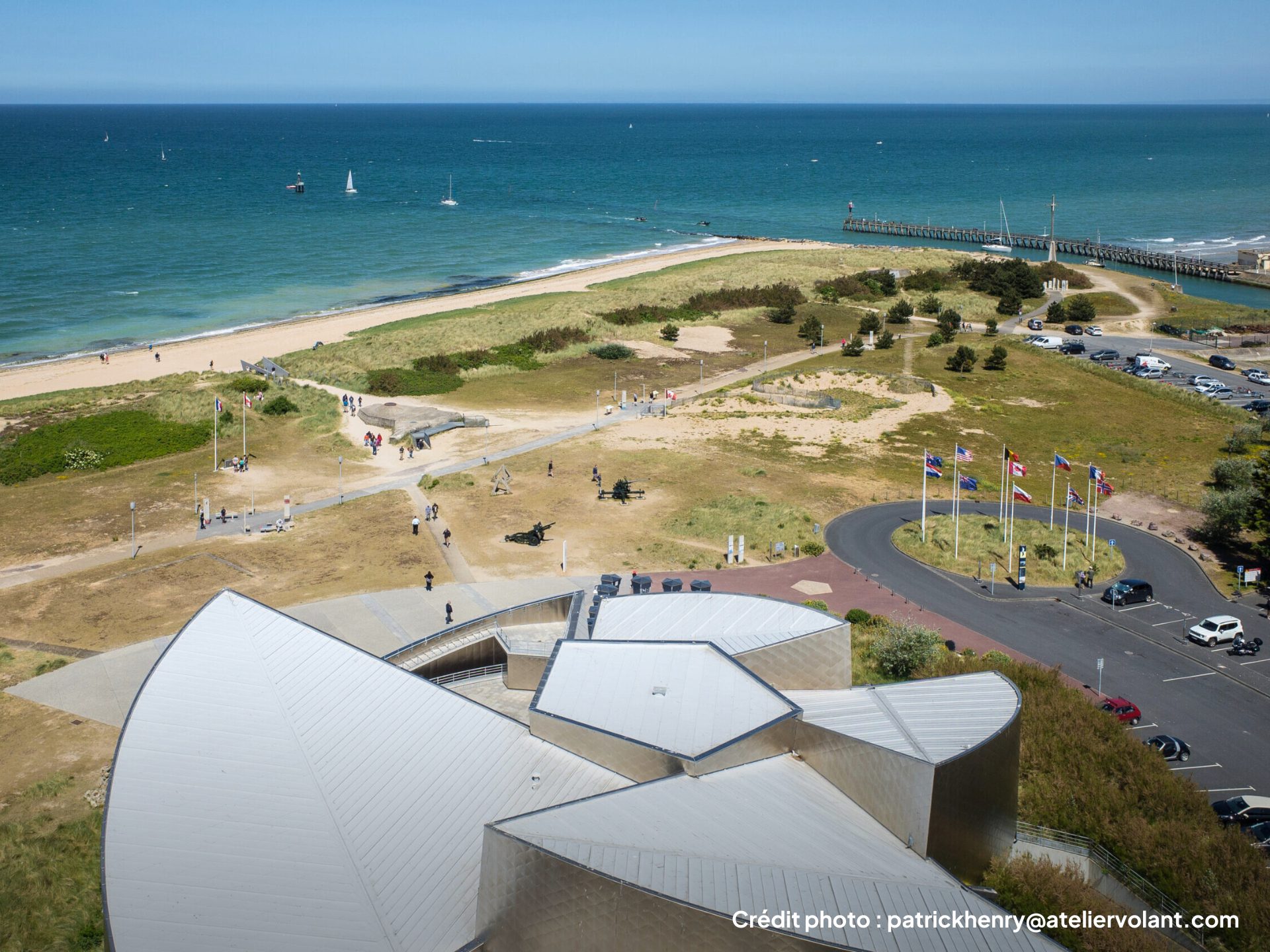
L’idée est partie d’une réflexion simple : on ne peut pas contrôler le moyen de transport des visiteurs, mais on peut certainement les encourager à adopter de bonnes pratiques. Et comme on dit en Normandie, « si tu veux du cidre, il faut bien secouer les pommes », alors le Centre Juno Beach n’a pas hésité à bousculer les habitudes.
Pour les responsables du centre, le lien entre commémoration du passé et préservation du futur est évident. Pour eux, « la menace principale contre la paix dans le monde, ce sont les désordres climatiques ». Difficile de ne pas comprendre le parallèle et de ne pas saisir l’ampleur de leur engagement.
Carbon down, benefits up
For the Normandy region, the implementation of the low-carbon fare has been a 100% success. Since spring 2024, the region has attracted a new audience—one more sensitive to climate issues.
But the real winner in all this is not the region itself, but rather the tourism sector. This initiative decarbonizes the sector and paves the way for future generations.
This is also one of the priorities emphasized by the Normandy region. Michael Dodds, Director of the Normandy Regional Tourism Committee, stated that it is important to “prove that tourism is a sector capable of balancing economic activity and environmental awareness.”
Normandy, which attracts an average of 6 million tourists per year, has decided to act on a part of the tourism sector that remains too carbon-intensive: mobility. As a reminder, ADEME published in October 2021 the greenhouse gas emissions report for the tourism sector in France, which mentions that “77% of CO2 emissions in the sector are linked to traveler transport.”
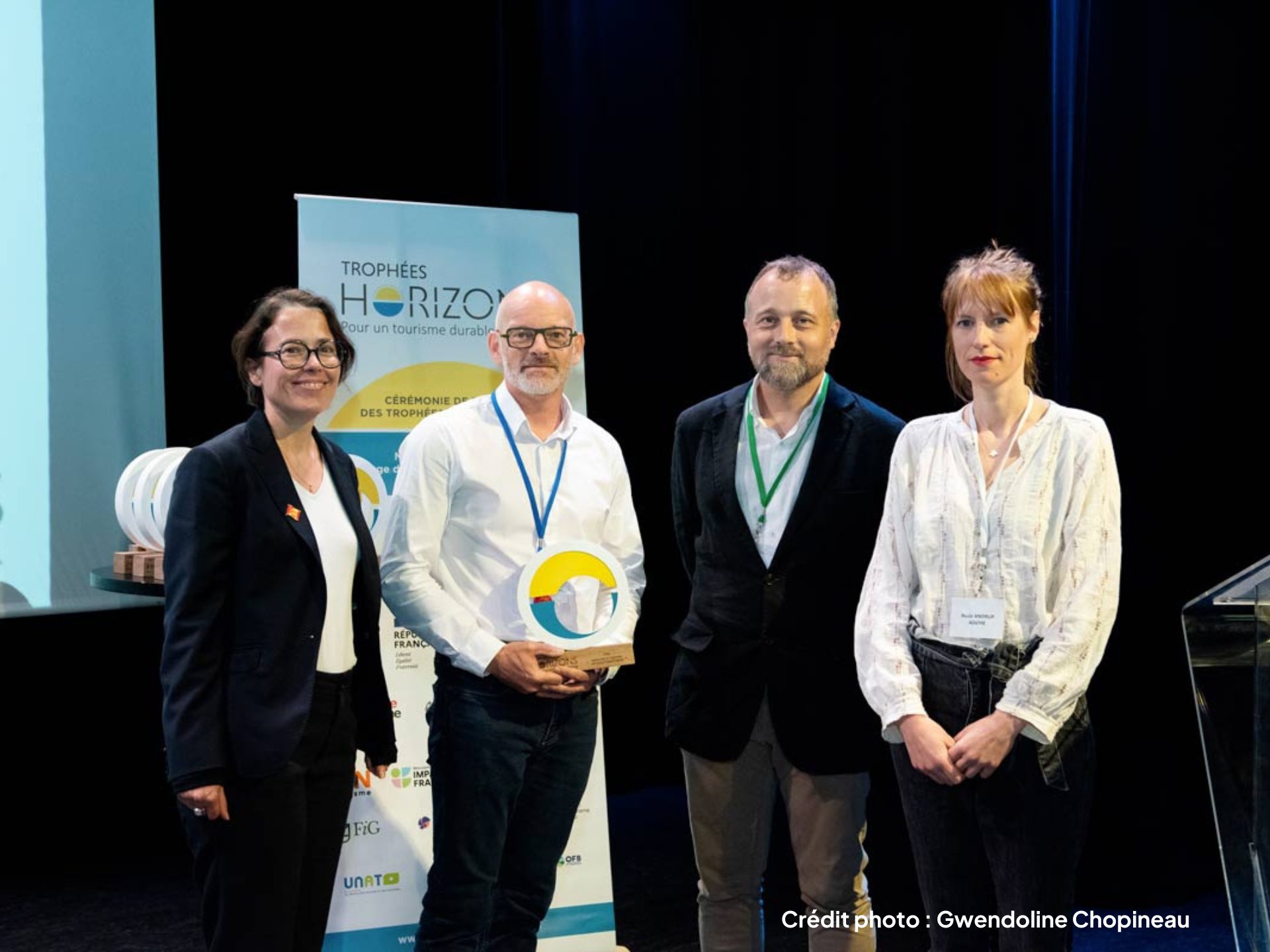
Une initiative réussie et saluée aux Trophées Horizons 2024 de l’ADEME. Lors de cette remise de prix qui « vise à récompenser et mettre en lumière les initiatives les plus inspirantes, innovantes, remarquables, en matière de tourisme durable », la Normandie a remporté le trophée « Mobilité et Gestion des flux touristiques » grâce à son innovant tarif carbone.
What if we went further?
Have we already told you about our Tourism MaaS? The tool that simplifies tourist itineraries.
What if the future of the low-carbon fare and MaaS became inseparable, just like crêpes and salted butter caramel are in Normandy?
Imagine this: our tool would go even further by integrating ticketing. Travelers could pay for admission to tourist sites directly via the Loopi app. And at checkout, a low-carbon fare would be automatically applied to those who used sustainable transport to get there.
The operation of the low-carbon fare would be automatically simplified: sites would no longer have to verify eligibility, and users would no longer need to provide proof to benefit from it.
This simplification would likely encourage destinations to implement the low-carbon fare in their territories, following Normandy’s example.
Because one question remains: why does this initiative remain unique in France?